
How chiropractic care, registered massage therapy and physiotherapy can work together to address pain, mobility and postural function.

Posture is frequently reduced to a visual instruction: sit upright, retract the shoulders or keep the head directly above the trunk. From a clinical perspective, however, posture is better understood as a dynamic neuromusculoskeletal process. It reflects the relationship between the body's segments, the forces acting upon them, and the nervous system's continuous adjustments to keep us stable and capable of movement. Posture is not simply an aesthetic preference, and it is not defined by a single universally correct position.
Prolonged exposure to an uncomfortable position, limited variation in movement, inadequate physical conditioning and accumulated workload may contribute to symptoms in susceptible individuals. The relationship is multifactorial: research has not established that one particular sitting or standing posture inevitably produces back pain [1]. The more useful clinical question is whether a person's body can comfortably tolerate and adapt to the positions and activities their daily life requires.
What is posture? A functional rather than purely structural definition
Static posture describes body position during relatively stationary tasks, such as sitting at a computer or standing at work. Dynamic posture concerns the coordinated positioning of the head, trunk, pelvis and extremities during walking, lifting, reaching and other movement.
Effective postural control depends on the integration of visual information, vestibular signals from the inner ear, and somatosensory information from muscles, tendons, joints and skin [2]. The central nervous system uses these inputs to regulate muscle recruitment, balance and movement. Accordingly, clinically meaningful postural health involves not merely spinal angles, but also joint mobility, muscular endurance, balance, respiratory mechanics, movement variability and the capacity to sustain relevant tasks without excessive symptoms.
How sustained loading may influence muscles, fascia and spinal tissues
Connective tissues are biologically responsive to mechanical loading. Fibroblasts and other cells respond to their extracellular environment through mechanotransduction, the conversion of mechanical signals into biochemical activity. Loading, recovery, physical activity, age and disease may affect extracellular matrix composition and connective-tissue mechanical properties. None of this means that ordinary slouching automatically causes fibrosis or permanent structural damage.
Fascia is a continuous connective-tissue network that surrounds and separates muscles and other structures. In the back, components of the thoracolumbar fascia normally move relative to one another during trunk motion. In an ultrasound study of 121 participants, Langevin and colleagues reported lower thoracolumbar fascial shear strain in people with chronic low-back pain than in those without it (56.4% versus 70.2%) [3]. This is evidence of an association between chronic symptoms and reduced tissue-layer motion, not proof that poor posture produced adhesions or that manual therapy can reverse a particular structural defect.
Hyaluronan, a constituent of the extracellular matrix, contributes to tissue lubrication and sliding. Its rheological properties have prompted hypotheses about fascial densification and responses to movement or hands-on treatment [4]. Yet the commonly used explanation that manual pressure physically “breaks up scar tissue,” “melts adhesions” or immediately reorganizes collagen substantially exceeds the available human clinical evidence. A more defensible model considers changes in perceived stiffness, sensory input, pain modulation and short-term movement tolerance.
Over time, reduced activity, age-related alterations in muscle strength and tissue properties, and certain spinal conditions can influence a person's resting position and movement capacity. These patterns warrant individualized assessment rather than an automatic assumption that the spine is becoming mechanically “locked” into a faulty alignment.
Why posture matters beyond the musculoskeletal system
1. Musculoskeletal function: load tolerance, mobility and fatigue
Head and trunk position alter the mechanical demands placed on muscles and joints. For example, maintaining the head forward of the trunk may increase the muscular effort required for some sustained tasks, while prolonged sitting can reduce opportunities for movement. In some people, these factors coexist with neck pain, upper-back discomfort, headaches, shoulder fatigue or limited tolerance for work. Their presence does not establish a single mechanical cause of pain: sleep, stress, physical activity, previous injury and general health also matter [1].
In older adults, excessive thoracic kyphosis has been associated with impaired balance and increased fall risk, although the underlying evidence is largely observational [5]. Clinically, the objective is to maintain sufficient mobility, strength and stability for daily function rather than pursue a visually idealized spinal curve.
2. Neurological function: proprioception, balance and movement control
Posture is actively regulated by the nervous system. Cervical and spinal proprioceptors provide information about segment position, while visual and vestibular pathways contribute to orientation and equilibrium [2]. Muscular fatigue, pain or restricted movement may alter how a person moves and perceives their body. Targeted rehabilitation can address sensorimotor deficits through graded exercise, balance tasks and repeated movement practice.
Hands-on therapies may influence pain and movement through a combination of sensory input, expectation, context and neurophysiological responses. These mechanisms should not be confused with claims that a spinal adjustment routinely removes “nerve interference,” treats neurological disease or permanently resets the brain. New neurological deficits, progressive weakness or persistent sensory changes require appropriate medical evaluation.
3. Respiratory mechanics: movement of the thorax and diaphragm
Thoracic alignment and mobility influence the position and excursion of the rib cage. A 2024 systematic review examined associations between forward-head posture and measures of lung function in young adults [6]. These findings are of interest but do not establish that changing posture will prevent respiratory disease. For a person who feels restricted through the upper back or chest, improving thoracic mobility and breathing coordination may nevertheless be a relevant rehabilitation goal.
4. Endocrine and metabolic health: the important distinction between posture and inactivity
The endocrine system regulates hormones involved in glucose metabolism, stress responses, growth and recovery. It is not scientifically established that ordinary poor spinal alignment directly causes a hormonal imbalance, or that chiropractic manipulation corrects cortisol, thyroid or other endocrine disorders.
The more credible connection relates to prolonged sedentary behaviour. A systematic review and meta-analysis of controlled trials found that interrupting prolonged sitting with short activity breaks improved post-meal glucose and insulin responses compared with uninterrupted sitting [7]. Insulin is a hormone, making this a legitimate endocrine-metabolic finding. Crucially, the benefit was associated with moving, not with holding an aesthetically “perfect” spine. Likewise, widely publicized claims that adopting an expansive posture reliably increases testosterone and lowers cortisol have not replicated consistently [8].
The practical implication is straightforward: posture-focused care can be paired with regular physical activity and reduced uninterrupted sitting, but manual therapies should not be marketed as hormonal treatments.
A coordinated treatment model: mobility, symptom modulation and lasting capacity
The rationale for integrating chiropractic care, treatment by a Registered Massage Therapist (RMT), and physiotherapy is that the three disciplines can address different, sometimes overlapping clinical needs. They are not inherently superior when delivered together to every patient, and no high-quality trial establishes this exact three-service package as a universal posture correction method. Selection should follow assessment, patient preference, goals and response to treatment.
Chiropractic care: addressing symptomatic joint movement and mobility

Chiropractic care can include spinal manipulation, mobilization, education and movement advice. A high-velocity, low-amplitude manipulation is a brief, controlled force delivered to a joint; mobilization generally uses slower movements within available motion. When appropriate, these interventions may help some individuals with spinal pain or movement-related limitations. Their benefits are usually modest and should be evaluated against functional outcomes, not merely the presence of an audible joint sound.
The World Health Organization conditionally recommends that spinal manipulative therapy may be offered as part of care for adults with chronic primary low-back pain, while rating the certainty of evidence as very low [9]. Manipulation does not place vertebrae permanently “back into position,” and it does not replace active rehabilitation. Selection of techniques, particularly in the cervical region, requires clinical screening, discussion of alternatives and informed consent.
Registered massage therapy: addressing soft-tissue symptoms and movement tolerance

Registered Massage Therapists use individualized soft-tissue techniques that may include sustained pressure, kneading, myofascial-oriented approaches and assisted stretching, depending on scope, patient preference and treatment objectives. Relevant regions may include the cervical extensors, upper trapezius, levator scapulae, pectoral region and thoracolumbar musculature when symptoms and examination findings warrant care.
Massage may help reduce perceived tension, short-term pain and movement-related guarding, creating an opportunity to participate more comfortably in activity. The WHO includes massage as a conditional option within a broader care plan for chronic primary low-back pain, but the supporting evidence is of very low certainty [9]. The treatment should not be described as forcibly detaching fascia or permanently lengthening tissue in a single session.
Physiotherapy: developing strength, endurance and sensorimotor capacity
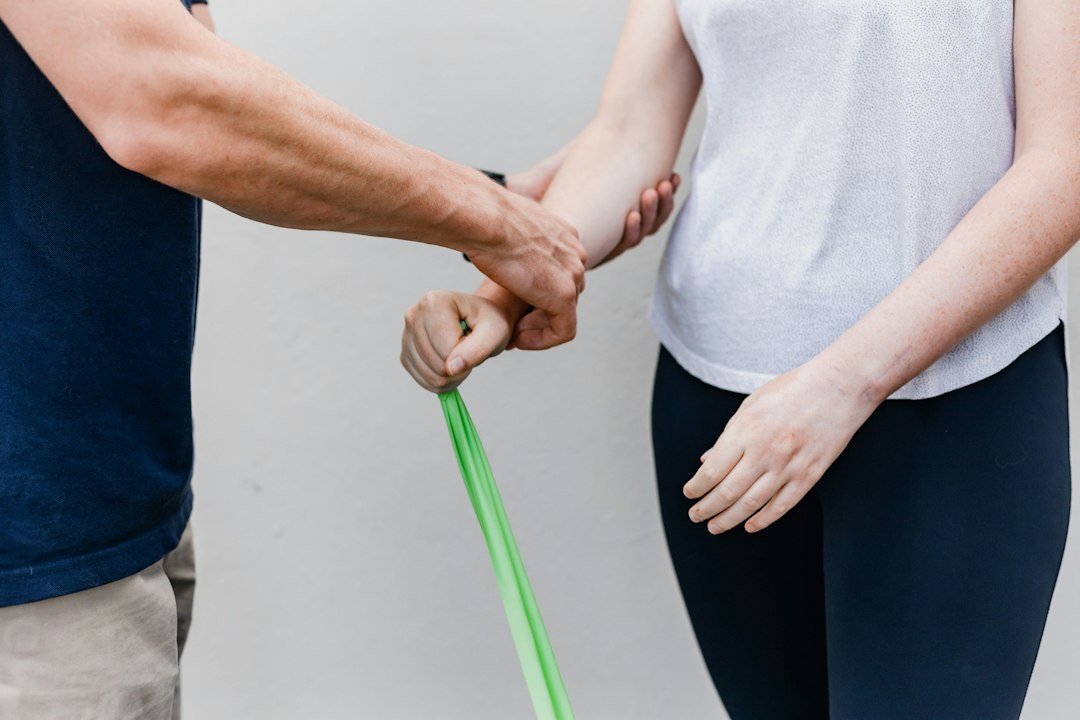
Physiotherapy contributes a particularly important active rehabilitation component. Following an assessment of functional limitations, a physiotherapist may prescribe graded thoracic mobility, deep neck flexor endurance, scapular control, posterior-chain strength, trunk conditioning, balance and task-specific practice. Appropriate exercises depend on the individual and should advance in dosage as tolerance improves.
Rather than teach patients to rigidly brace in a single position throughout the day, rehabilitation should build a wider repertoire of comfortable positions and movements. For some, this begins with simple range-of-motion work; for others, progressive resistance training and occupational conditioning are more important.
A 2023 systematic review of 22 studies found that manual therapy combined with exercise may improve pain and disability in nonspecific neck pain compared with exercise alone, although certainty varied and clinically meaningful differences were not consistently established [10]. The finding supports thoughtful multimodal care but does not prove that all three therapies are necessary or that outcomes are guaranteed.
Translating the science into an individualized rehabilitation pathway
An integrated plan may proceed through overlapping stages rather than rigidly separated appointments:
Stage 1 | Clinical assessment and symptom management. Establish the patient's history, relevant neurological findings, spinal and shoulder mobility, functional goals, work demands and activity tolerance. Appropriate chiropractic or RMT treatment may be used to make necessary movement more tolerable. Serious pathology and contraindications must be considered first.
Stage 2 | Restore movement options and begin strengthening. Integrate exercises for the regions and activities found to be limiting. Examples may include thoracic extension and rotation, graded pectoral mobility, neck-flexor endurance or scapular strengthening. Treatment is guided by measurable progress rather than a predetermined “perfect posture” template.
Stage 3 | Build resilience and self-management. Progress load, endurance and confidence; adjust workstation demands when useful; practice sustainable movement breaks; and plan how to manage temporary symptom flare-ups. The goal is greater autonomy and the capacity to work, exercise and perform everyday tasks.
A person with mild postural discomfort may need only education and exercise. Someone with concurrent symptomatic stiffness or muscular sensitivity may benefit from a time-limited combination of manual care and rehabilitation. The number and type of interventions should be justified by the patient's needs.
What can you do between appointments?
Vary positions throughout the day. Interrupt extended sitting with a brief standing or walking break when feasible. Build general physical activity and resistance training appropriate to your health and fitness. Organize your workspace to make frequently used tasks comfortable, rather than trying to maintain one position without interruption. Finally, track meaningful outcomes such as how long you can work comfortably, whether symptoms interfere with sleep and how confidently you can move, instead of judging progress only by photographs of spinal alignment.
Conclusion: sustainable posture is a capacity, not a pose
Postural health is best approached as the interaction of tissue mechanics, motor control, physical conditioning and everyday behaviour. Connective tissue can respond to loading, and some people with chronic pain exhibit altered fascial motion. The nervous system continuously regulates balance and movement, while reducing sedentary time has measurable metabolic benefits. These facts support a comprehensive, individualized strategy, but they do not justify claims that every slouched position is harmful or that a single treatment mechanically “corrects” the spine.
At Perfect Posture Chiropractic & Rehab in Thornhill, chiropractic care, Registered Massage Therapy and physiotherapy can be coordinated where clinically appropriate to help patients manage symptoms, restore mobility, improve strength and develop sustainable movement habits. Book a chiropractic, massage therapy or physiotherapy appointment to discuss which approach fits your needs: https://perfectpostureclinic.com/
This article is for general education and does not replace individual medical assessment. Seek prompt medical attention for progressive weakness, new bowel or bladder dysfunction, saddle numbness, fever with significant back pain, or serious symptoms following trauma.
References
- Swain CTV, Pan F, Owen PJ, Schmidt H, Belavy DL. No consensus on causality of spine postures or physical exposure and low back pain: A systematic review of systematic reviews. J Biomech. 2020;102:109312. https://doi.org/10.1016/j.jbiomech.2019.08.006
- Chaudhary S, Saywell N, Taylor D. The differentiation of self-motion from external motion is a prerequisite for postural control: A narrative review of visual-vestibular interaction. Front Hum Neurosci. 2022. https://pubmed.ncbi.nlm.nih.gov/35210998/
- Langevin HM, Fox JR, Koptiuch C, et al. Reduced thoracolumbar fascia shear strain in human chronic low back pain. BMC Musculoskelet Disord. 2011;12:203. https://doi.org/10.1186/1471-2474-12-203
- Pratt RL. Hyaluronan and the Fascial Frontier. Int J Mol Sci. 2021;22(13):6845. https://pmc.ncbi.nlm.nih.gov/articles/PMC8269293/
- Gasavi Nezhad Z, Gard SA, Arazpour M. The effects of hyperkyphosis on balance and fall risk in older adults: A systematic review. Gait Posture. 2025;118:154–167. https://doi.org/10.1016/j.gaitpost.2025.02.005
- Deniz Y, Ertekin D, Cokar D. The effect of forward head posture on dynamic lung volumes in young adults: A systematic review. Bull Fac Phys Ther. 2024;29:15. https://doi.org/10.1186/s43161-024-00186-7
- Gale et al. The acute effects of interrupting prolonged sitting with regular activity breaks on postprandial glucose and insulin in adults: A systematic review and meta-analysis. Obes Rev. 2026. https://doi.org/10.1111/obr.70152
- Ranehill E, Dreber A, Johannesson M, Leiberg S, Sul S, Weber RA. Assessing the robustness of power posing: No effect on hormones and risk tolerance in a large sample of men and women. Psychol Sci. 2015;26(5):653–656. https://doi.org/10.1177/0956797614553946
- World Health Organization. WHO guideline for non-surgical management of chronic primary low back pain in adults in primary and community care settings. Geneva: WHO; 2023. https://www.who.int/publications/i/item/9789240081789
- Wilhelm M, Cleland J, Carroll A, et al. The combined effects of manual therapy and exercise on pain and related disability for individuals with nonspecific neck pain: A systematic review with meta-analysis. J Man Manip Ther. 2023;31(6):393–407. https://doi.org/10.1080/10669817.2023.2202895
Research foundation: adapted and expanded from the supplied two-page “Spinal Posture & Tissue Remodeling Research Summary.” Mechanistic claims were calibrated to the published evidence and clinical guidelines listed above.
